
The Difference Between a Deep Clean and a Regular Clean
Updated: Sep 6
The confusion between these two terms is partly the cleaning industry's fault. The word 'deep' gets used loosely, and a regular clean that's marketed aggressively can end up sounding similar to a deep clean in service descriptions. But the actual difference in scope is significant, and understanding it will save you from booking the wrong service or expecting a result that wasn't part of what you paid for.
The difference between deep clean and regular clean is fundamentally about which surfaces get addressed, not how thoroughly those surfaces are cleaned. A regular clean maintains a home that's already clean. A deep clean addresses everything, including the things that regular cleaning was never designed to reach.
Quick Answer: What's the Difference Between a Deep Clean and a Regular Clean?
A regular clean maintains a home that's already clean, floors, counters, and bathroom fixtures, while a deep clean reaches everywhere a regular clean doesn't: inside appliances, baseboards, window tracks, and grout. A deep clean typically takes four to eight hours versus about two hours for a regular clean, and most households benefit from a professional deep clean every three to six months alongside regular maintenance.
What a Regular Clean Actually Covers
Deep cleaning vs regular cleaning becomes clearer when you list what a standard maintenance clean includes: vacuumed and mopped floors, wiped kitchen counters and appliance exteriors, bathroom cleaning (sink, toilet, shower or tub, mirror), dusting accessible surfaces, and emptied trash. That's it.
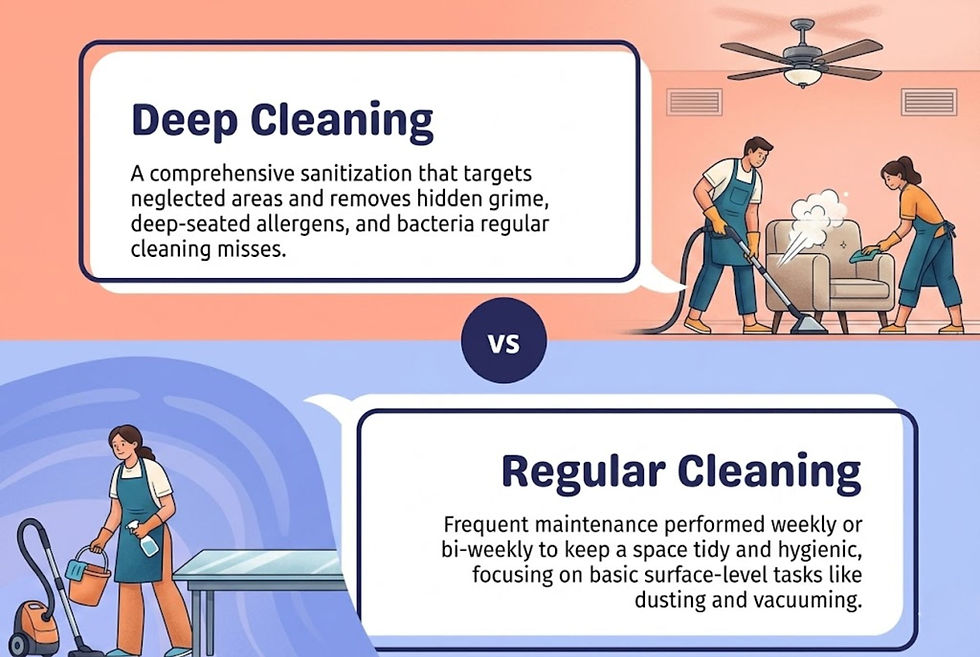
A regular clean does not include the inside of appliances. It doesn't cover the area behind furniture, baseboards, window tracks, cabinet interiors, ceiling fans, light fixtures, or exhaust fans. These omissions are not failures of the service. They're exactly what a maintenance clean is designed to be, a recurring service that keeps a clean home clean.
Where regular cleaning falls short is when those surfaces that it doesn't address have been accumulating buildup over months or years. At that point, a regular clean maintains the visible layer of cleanliness while the less visible dirt compounds beneath it.
What a Deep Clean Covers That Regular Cleaning Doesn't
What does a deep clean include that a standard visit doesn't? The short version: the inside of everything, the behind of everything, and the surfaces that require extra equipment or effort to reach.
Inside oven, microwave, and refrigerator (including freezer)
Behind and underneath all appliances
Cabinet interiors, drawer tracks, and hardware
Baseboards and door frames in every room
Window sills, window trim molding, and window tracks
Ceiling fans and light fixtures
Bathroom tile grout, caulking, and exhaust fan
Air vents and return grilles
Switch plates, outlet covers, and doorknobs
Areas behind and under furniture
A deep clean also takes considerably longer. An average home that takes two hours to maintain with a regular clean will typically take four to eight hours for a thorough deep clean, depending on size and current condition.
Which One Does Your Home Actually Need?
What is included in a deep clean determines which homes benefit from it. If you've been receiving regular professional or consistent self-cleaning and nothing has been missed for an extended period, maintenance cleaning is sufficient. If you've moved into a new space, haven't had any professional cleaning in six months or more, have visible grime in appliances or bathrooms, or are preparing for guests or a rental inspection, a deep clean is the right starting point.
Think of it this way: a deep clean establishes the standard. Regular cleaning maintains it. Both are necessary; they just serve different functions.
How Often to Deep Clean
How often you should deep clean your house depends on household size, pets, children, and how consistent the regular cleaning routine is. For most households, a professional deep clean every three to six months alongside regular maintenance cleaning is a reasonable standard.
Homes with pets or children, particularly those with carpets, benefit from a deep clean closer to every three months. Single-person households with consistent self-cleaning habits can often manage an annual deep clean, though appliance interiors, exhaust fans, and grout still deserve attention at least twice a year.
The signal that a deep clean is overdue is when a regular clean session leaves things that still look or feel dirty. That residual dirtiness is the buildup in areas the regular cleaning doesn't reach, and it compounds over time.
What to Ask When Booking a Cleaning Service
Not every cleaning company defines these terms the same way. Before booking, ask specifically whether the service includes the inside of appliances, areas behind furniture, baseboards, window tracks, and cabinet interiors. If the answer is no to most of those, you are booking a regular clean regardless of how it is labelled.
Most experienced cleaning professionals will recommend beginning a new client relationship with a deep clean before transitioning to regular maintenance. That recommendation is about sequence and practicality, not upselling. A regular clean on a home that needs a deep clean first will always produce a less satisfying result than both parties want.
Conclusion
The difference between deep clean and regular clean is clear once you know what each covers: regular cleaning maintains visible surfaces on a recurring schedule; deep cleaning addresses everything, including the areas that regular cleaning was never designed to touch. Both serve important purposes at different intervals.

If you are unsure which your home currently needs, or if your last few regular cleans have left things still feeling less clean than you'd like, a deep clean is usually the right answer. Arctic Star offers both, and can help you figure out where to start.
FAQ
Q1. How much more expensive is a deep clean than a regular clean?
Typically two to three times the cost of a regular clean for the same home, reflecting the additional time and labor involved. Exact pricing depends on home size, condition, and company rates.
Q2. Can I do a deep clean myself?
Yes, though it requires significantly more time, the right products for each surface, and the physical willingness to get into the awkward spaces. For most people, a professional deep clean every few months alongside consistent self-cleaning maintenance is a more practical combination.
Q3. Is a move-out clean the same as a deep clean?
Similar in scope, but move-out cleans focus specifically on returning a property to move-in condition. They often go further than a standard deep clean in areas like cabinet interiors and require complete debris removal.
Q4. How do I know if my home needs a deep clean or just a regular clean?
If your last few regular cleans have left areas still looking or feeling dirty, if you haven't had any professional cleaning in more than six months, or if you can see visible buildup inside appliances or bathroom grout, a deep clean is the right choice.


Comments